[mk_page_section sidebar=”sidebar-1″][vc_column][vc_empty_space height=”50″][vc_custom_heading text=”Canadian Special ModelPlans (CSM)” font_container=”tag:h1|text_align:center” use_theme_fonts=”yes”][vc_empty_space height=”40″][vc_separator color=”custom” border_width=”5″ accent_color=”#ffa826″][/vc_column][/mk_page_section][mk_page_section][vc_column width=”1/12″][/vc_column][vc_column width=”5/6″][vc_column_text css=”.vc_custom_1708872564874{margin-bottom: 0px !important;}”]Canadian Special ModelPlans (CSM) were prepared as supplements to Canadian MeccaNotes (CMN) by the Canadian Modeling Association for Meccano & Allied Systems (CMAMAS).
Written and produced by Meccano enthusiasts for Meccano enthusiasts.
Please see below for the Canadian Special ModelPlans now available including an illustration of the front cover. Please note that many newer ModelPlans have been published in the pages of Canadian MeccaNotes.
These ModelPlans can be downloaded by clicking on the front page illustration!
Note: if you rebuild these Meccano models then CMAMAS would appreciate photos or videos of your model so we may post them on our website!
Please use “Ctrl-F” to search for specific keywords.
[/vc_column_text][/vc_column][vc_column width=”1/12″][/vc_column][/mk_page_section][mk_page_section][vc_column][vc_separator color=”custom” border_width=”5″ accent_color=”#ffa826″][vc_row_inner][vc_column_inner width=”1/6″][/vc_column_inner][vc_column_inner width=”1/4″][mk_image src=”http://staging.cmamas.ca/wp-content/uploads/2024/01/csm01-an-accurate-orrery-scaled.jpg” image_size=”full” link=”http://staging.cmamas.ca/CSM/CSM01 An Accurate Orrery.pdf” target=”_blank” drop_shadow=”true”][/vc_column_inner][vc_column_inner width=”7/12″][vc_column_text css=”.vc_custom_1705680420412{margin-bottom: 0px !important;}”]CSM01 An Accurate Orrery
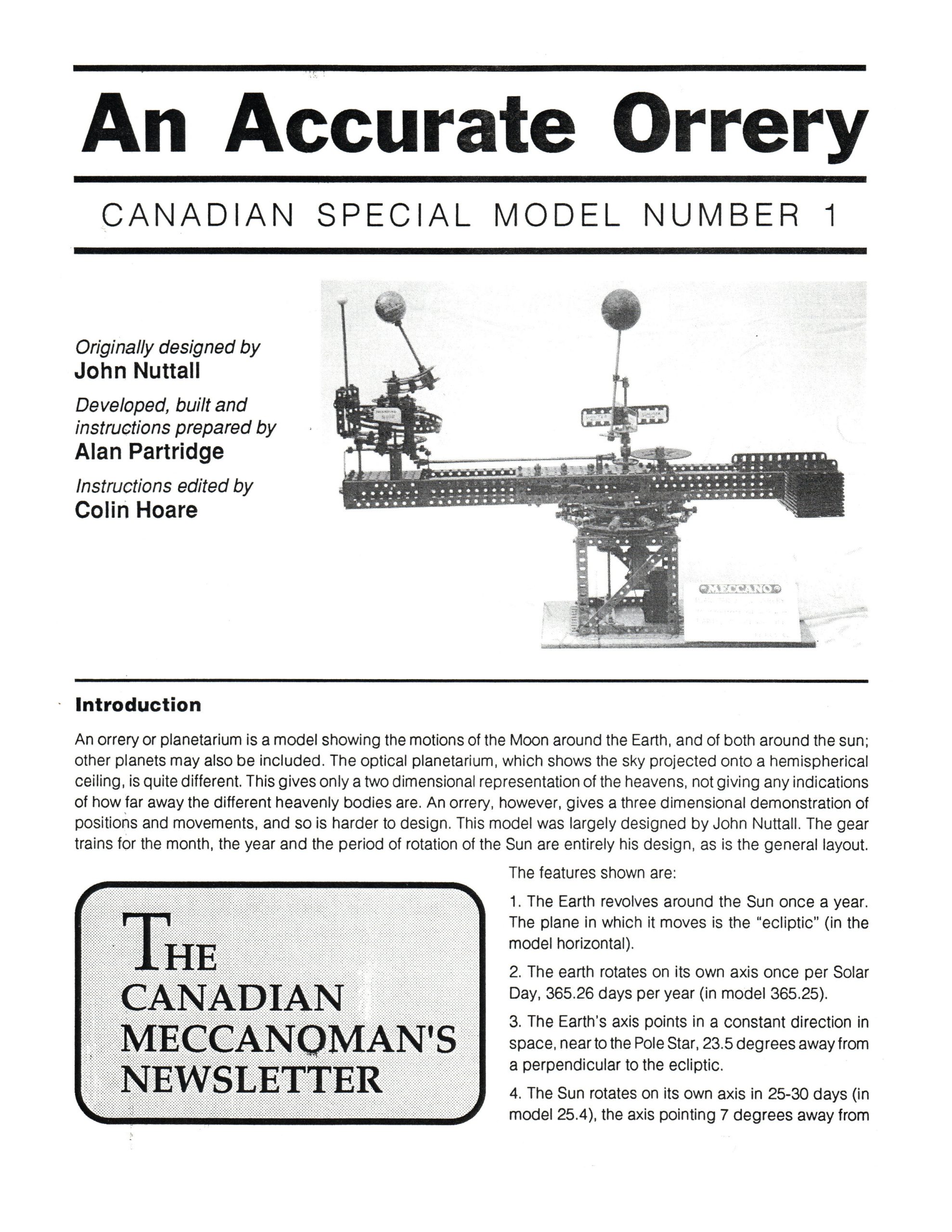
Originally designed by John Nuttall.
Developed, built and instructions prepared by Alan Partridge.
An orrery or planetarium is a model showing the motions of the Moon around the Earth, and of both around the sun; other planets may also be included.[/vc_column_text][/vc_column_inner][/vc_row_inner][vc_separator color=”custom” border_width=”5″ accent_color=”#ffa826″ css=”.vc_custom_1580303244952{padding-top: 20px !important;padding-bottom: 10px !important;}”][/vc_column][/mk_page_section][mk_page_section][vc_column][vc_row_inner][vc_column_inner width=”1/6″][/vc_column_inner][vc_column_inner width=”1/4″][mk_image src=”http://staging.cmamas.ca/wp-content/uploads/2024/01/csm02-chemical-fire-engine-scaled.jpg” image_size=”full” link=”http://staging.cmamas.ca/CSM/CSM02 Chemical Fire Engine.pdf” target=”_blank” drop_shadow=”true”][/vc_column_inner][vc_column_inner width=”7/12″][vc_column_text css=”.vc_custom_1705680568388{margin-bottom: 0px !important;}”]CSM02 Chemical Fire Engine
Designed, built and described by Don Redmond.
Chemical fire engines were huge soda-acid fire extinguishers on wheels, carrying tanks of 30-to-80 gallon sizes (136 to 360 liters) of water in which was 12 to 30 pounds of sodium bicarbonate (baking soda; 5 to 12 kg). Suspended inside was a bottle of sulfuric acid (7 to 14 lb, 3 to 6 kg).[/vc_column_text][/vc_column_inner][/vc_row_inner][vc_separator color=”custom” border_width=”5″ accent_color=”#ffa826″ css=”.vc_custom_1580303244952{padding-top: 20px !important;padding-bottom: 10px !important;}”][/vc_column][/mk_page_section][mk_page_section][vc_column][vc_row_inner][vc_column_inner width=”1/6″][/vc_column_inner][vc_column_inner width=”1/4″][mk_image src=”http://staging.cmamas.ca/wp-content/uploads/2024/01/csm03-a-remontoire-clock-scaled.jpg” image_size=”full” link=”http://staging.cmamas.ca/CSM/CSM03 A Remontoire Clock.pdf” target=”_blank” drop_shadow=”true”][/vc_column_inner][vc_column_inner width=”7/12″][vc_column_text css=”.vc_custom_1705679818110{margin-bottom: 0px !important;}”]CSM03 A Remontoire Clock
From an original design by Claude Gobez and Jack Partridge.
Built and described by Dr. Keith W. Cameron.
Remontoire definition: a device in a timepiece whereby the main source of power periodically winds a spring or lifts a weight to drive the actual mechanism.[/vc_column_text][/vc_column_inner][/vc_row_inner][/vc_column][/mk_page_section][vc_separator color=”custom” border_width=”5″ accent_color=”#ffa826″ css=”.vc_custom_1580303244952{padding-top: 20px !important;padding-bottom: 10px !important;}”][mk_page_section][vc_column][vc_row_inner][vc_column_inner width=”1/6″][/vc_column_inner][vc_column_inner width=”1/4″][mk_image src=”http://staging.cmamas.ca/wp-content/uploads/2024/01/csm04-rhino-charger-robotic-arm-scaled.jpg” image_size=”full” link=”http://staging.cmamas.ca/CSM/CSM04 Rhino Charger Robotic Arm.pdf” target=”_blank” drop_shadow=”true”][/vc_column_inner][vc_column_inner width=”7/12″][vc_column_text css=”.vc_custom_1713378672657{margin-bottom: 0px !important;}”]CSM04 Rhino Charger Robotic Arm
Designed and described by Dr. Keith Cameron.
This robot arm is described by its manufacturer as: “a sophisticated pick and place robotic system that’s reliable, versatile and affordable. 6-axis (plus grasp) all-electric overhead arm configured to meet the specialized requirements of smaller industrial environments. (16″x16″ base, 28″ floor to shoulder, 36″ maximum reach, 5 to 50 lb. lift capacity)”.
See also:
[/vc_column_text][/vc_column_inner][/vc_row_inner][vc_separator color=”custom” border_width=”5″ accent_color=”#ffa826″ css=”.vc_custom_1580303244952{padding-top: 20px !important;padding-bottom: 10px !important;}”][/vc_column][/mk_page_section][mk_page_section][vc_column][vc_row_inner][vc_column_inner width=”1/6″][/vc_column_inner][vc_column_inner width=”1/4″][mk_image src=”http://staging.cmamas.ca/wp-content/uploads/2024/01/csm05-road-grader-scaled.jpg” image_size=”full” link=”http://staging.cmamas.ca/CSM/CSM05 Road Grader.pdf” target=”_blank” drop_shadow=”true”][/vc_column_inner][vc_column_inner width=”7/12″][vc_column_text css=”.vc_custom_1705849606046{margin-bottom: 0px !important;}”]CSM05 Road Grader
Built by Rick Collette.
Described by Colin Hoare.
Construction of this model is not difficult and no unusual parts are required, other than six 6″ ashtray tyres and two centre-off three-way micro switches.[/vc_column_text][/vc_column_inner][/vc_row_inner][vc_separator color=”custom” border_width=”5″ accent_color=”#ffa826″ css=”.vc_custom_1580303244952{padding-top: 20px !important;padding-bottom: 10px !important;}”][/vc_column][/mk_page_section][mk_page_section][vc_column][vc_row_inner][vc_column_inner width=”1/6″][/vc_column_inner][vc_column_inner width=”1/4″][mk_image src=”http://staging.cmamas.ca/wp-content/uploads/2024/01/csm06-krazy-klock-scaled.jpg” image_size=”full” link=”http://staging.cmamas.ca/CSM/CSM06 Krazy Klock.pdf” target=”_blank” drop_shadow=”true”][/vc_column_inner][vc_column_inner width=”7/12″][vc_column_text css=”.vc_custom_1713638133990{margin-bottom: 0px !important;}”]CSM06 Krazy Klock
Designed, built and described by Dr. Keith W. Cameron.
This novelty item is powered by an all Meccano synchronous motor. Open construction reveals four mini-Meccanomen busy apparently moving the mechanism through a system of cranks, levers and gears which are built from strips, angle brackets, couplings and other parts. There is a full complement of hands, seconds, minutes and hours, and a clutch allows them to be set.
See also:
[/vc_column_text][/vc_column_inner][/vc_row_inner][vc_separator color=”custom” border_width=”5″ accent_color=”#ffa826″ css=”.vc_custom_1580303244952{padding-top: 20px !important;padding-bottom: 10px !important;}”][/vc_column][/mk_page_section][mk_page_section][vc_column][vc_row_inner][vc_column_inner width=”1/6″][/vc_column_inner][vc_column_inner width=”1/4″][mk_image src=”http://staging.cmamas.ca/wp-content/uploads/2024/01/csm07-divers-helmet-scaled.jpg” image_size=”full” link=”http://staging.cmamas.ca/CSM/CSM07 Diver’s Helmet.pdf” target=”_blank” drop_shadow=”true”][/vc_column_inner][vc_column_inner width=”7/12″][vc_column_text css=”.vc_custom_1705681154908{margin-bottom: 0px !important;}”]CSM07 Diver’s Helmet
Designed, built and described by Don Redmond.
Inside the shining brass helmet, mounted on a base, can be seen the head of a diver. When a button is pressed, a fish swims around his head inside the helmet—much to the astonishment of the diver, by his expression, and much to the amusement of the onlookers who push the button in answer to a card asking, “What Did the Diver Find?”[/vc_column_text][/vc_column_inner][/vc_row_inner][vc_separator color=”custom” border_width=”5″ accent_color=”#ffa826″ css=”.vc_custom_1580303244952{padding-top: 20px !important;padding-bottom: 10px !important;}”][/vc_column][/mk_page_section][mk_page_section][vc_column][vc_row_inner][vc_column_inner width=”1/6″][/vc_column_inner][vc_column_inner width=”1/4″][mk_image src=”http://staging.cmamas.ca/wp-content/uploads/2024/01/csm08-three-planet-orrery-scaled.jpg” image_size=”full” link=”http://staging.cmamas.ca/CSM/CSM08 Three Planet Orrery.pdf” target=”_blank” drop_shadow=”true”][/vc_column_inner][vc_column_inner width=”7/12″][vc_column_text css=”.vc_custom_1705681262165{margin-bottom: 0px !important;}”]CSM08 Three Planet Orrery
By Alan Partridge and John Nuttall.
The model shows the movement of Mercury, Venus and Earth around the Sun, and the rotation of each of these on its own axis.[/vc_column_text][/vc_column_inner][/vc_row_inner][vc_separator color=”custom” border_width=”5″ accent_color=”#ffa826″ css=”.vc_custom_1580303244952{padding-top: 20px !important;padding-bottom: 10px !important;}”][/vc_column][/mk_page_section][mk_page_section][vc_column][vc_row_inner][vc_column_inner width=”1/6″][/vc_column_inner][vc_column_inner width=”1/4″][mk_image src=”http://staging.cmamas.ca/wp-content/uploads/2024/01/csm09-c-c-electric-locomotive-scaled.jpg” image_size=”full” link=”http://staging.cmamas.ca/CSM/CSM09 C-C Electric Locomotive.pdf” target=”_blank” drop_shadow=”true”][/vc_column_inner][vc_column_inner width=”7/12″][vc_column_text css=”.vc_custom_1705681364903{margin-bottom: 0px !important;}”]CSM09 C-C Electric Locomotive
By Dr. Keith W. Cameron.
The rarity of Meccano Models of electric locomotives may be due to several factors: their less romantic box-like appearance, their fewer visible moving parts, the difficulty in modelling a pantograph, and the scarcity of source material regarding prototypes.[/vc_column_text][/vc_column_inner][/vc_row_inner][vc_separator color=”custom” border_width=”5″ accent_color=”#ffa826″ css=”.vc_custom_1580303244952{padding-top: 20px !important;padding-bottom: 10px !important;}”][/vc_column][/mk_page_section][mk_page_section][vc_column][vc_row_inner][vc_column_inner width=”1/6″][/vc_column_inner][vc_column_inner width=”1/4″][mk_image src=”http://staging.cmamas.ca/wp-content/uploads/2024/01/csm10-la-reale-oared-fighting-ship-scaled.jpg” image_size=”full” link=”http://staging.cmamas.ca/CSM/CSM10 La Reale Oared Fighting Ship.pdf” target=”_blank” drop_shadow=”true”][/vc_column_inner][vc_column_inner width=”7/12″][vc_column_text css=”.vc_custom_1731949774630{margin-bottom: 0px !important;}”]CSM10 La Reale Oared Fighting Ship
Designed by Dennis Wright.
Rebuilt and described by Jerry DuBois.
The name La Reale describes a ship which belonged to the king of France, and from the year 1526 the flagship of the French galley commander was named La Reale and carried the flags of both the King and her commander. It is likely that the most complete version of the galley had already come into being about the middle of the seventeenth century.
See also:
La Reale Oared Fighting Ship by Dennis Caswell[/vc_column_text][/vc_column_inner][/vc_row_inner][vc_separator color=”custom” border_width=”5″ accent_color=”#ffa826″ css=”.vc_custom_1580303244952{padding-top: 20px !important;padding-bottom: 10px !important;}”][/vc_column][/mk_page_section][mk_page_section][vc_column][vc_row_inner][vc_column_inner width=”1/6″][/vc_column_inner][vc_column_inner width=”1/4″][mk_image src=”http://staging.cmamas.ca/wp-content/uploads/2024/01/csm11-kenworth-w-900-tractor-scaled.jpg” image_size=”full” link=”http://staging.cmamas.ca/CSM/CSM11 Kenworth W-900 Tractor.pdf” target=”_blank” drop_shadow=”true”][/vc_column_inner][vc_column_inner width=”7/12″][vc_column_text css=”.vc_custom_1705681650210{margin-bottom: 0px !important;}”]CSM11 Kenworth W-900 Tractor
By Dr. Keith W. Cameron.
When you see a Kenworth rolling down the highway, you’re looking at a quality truck! Owner/operators who drive these rugged 10-wheelers rave about their comfort and dependability.[/vc_column_text][/vc_column_inner][/vc_row_inner][vc_separator color=”custom” border_width=”5″ accent_color=”#ffa826″ css=”.vc_custom_1580303244952{padding-top: 20px !important;padding-bottom: 10px !important;}”][/vc_column][/mk_page_section][mk_page_section][vc_column][vc_row_inner][vc_column_inner width=”1/6″][/vc_column_inner][vc_column_inner width=”1/4″][mk_image src=”http://staging.cmamas.ca/wp-content/uploads/2024/01/csm12-james-watts-1788-rotative-beam-engine-scaled.jpg” image_size=”full” link=”http://staging.cmamas.ca/CSM/CSM12 James Watt’s 1788 Rotative Beam Engine.pdf” target=”_blank” drop_shadow=”true”][/vc_column_inner][vc_column_inner width=”7/12″][vc_column_text css=”.vc_custom_1708014263309{margin-bottom: 0px !important;}”]CSM12 James Watt’s 1788 Rotative Beam Engine
By Don Redmond.
One of a sequence of steam engines produced by James Watt, the 1788 “Lap” engine, the first to have Watt’s centrifugal governor, was used to drive the “laps” (polishing machines) in the Boulton and Watt foundry until it was retired to the Science Museum in London, England.
See also:
- Model parts list in Canadian Meccano News September 1994 Page 20
[/vc_column_text][/vc_column_inner][/vc_row_inner][vc_separator color=”custom” border_width=”5″ accent_color=”#ffa826″ css=”.vc_custom_1580303244952{padding-top: 20px !important;padding-bottom: 10px !important;}”][/vc_column][/mk_page_section][mk_page_section][vc_column][vc_row_inner][vc_column_inner width=”1/6″][/vc_column_inner][vc_column_inner width=”1/4″][mk_image src=”http://staging.cmamas.ca/wp-content/uploads/2024/01/csm13-maypole-tubular-braider-scaled.jpg” image_size=”full” link=”http://staging.cmamas.ca/CSM/CSM13 Maypole Tubular Braider.pdf” target=”_blank” drop_shadow=”true”][/vc_column_inner][vc_column_inner width=”7/12″][vc_column_text css=”.vc_custom_1705681998876{margin-bottom: 0px !important;}”]CSM13 Maypole Tubular Braider
The original model was designed by Sr. Servetti of Italy and was rebuilt, photographed and described for this leaflet by Dr. Keith W. Cameron.
The braider is an excellent exhibition model. It produces patterned braid around a core at high speed, from nine threads fed from spool-carriers which execute a complex “dance” around the core strongly reminiscent of the Maypole Dance.[/vc_column_text][/vc_column_inner][/vc_row_inner][vc_separator color=”custom” border_width=”5″ accent_color=”#ffa826″ css=”.vc_custom_1580303244952{padding-top: 20px !important;padding-bottom: 10px !important;}”][/vc_column][/mk_page_section][mk_page_section][vc_column][vc_row_inner][vc_column_inner width=”1/6″][/vc_column_inner][vc_column_inner width=”1/4″][mk_image src=”http://staging.cmamas.ca/wp-content/uploads/2024/01/csm14-twin-beam-pumping-engine-scaled.jpg” image_size=”full” link=”http://staging.cmamas.ca/CSM/CSM14 Twin Beam Pumping Engine.pdf” target=”_blank” drop_shadow=”true”][/vc_column_inner][vc_column_inner width=”7/12″][vc_column_text css=”.vc_custom_1705682664250{margin-bottom: 0px !important;}”]CSM14 Twin Beam Pumping Engine
By Mike Cotterill.
Edited by Colin Hoare.
The model is based upon an amalgam of prototypes, chief amongst which is the small twin engine built in 1867, and now preserved at Kew Bridge Engine Station in London, England.[/vc_column_text][/vc_column_inner][/vc_row_inner][vc_separator color=”custom” border_width=”5″ accent_color=”#ffa826″ css=”.vc_custom_1580303244952{padding-top: 20px !important;padding-bottom: 10px !important;}”][/vc_column][/mk_page_section][mk_page_section][vc_column][vc_row_inner][vc_column_inner width=”1/6″][/vc_column_inner][vc_column_inner width=”1/4″][mk_image src=”http://staging.cmamas.ca/wp-content/uploads/2024/01/csm15-old-tyme-ferris-wheel-scaled.jpg” image_size=”full” link=”http://staging.cmamas.ca/CSM/CSM15 Old Tyme Ferris Wheel.pdf” target=”_blank” drop_shadow=”true”][/vc_column_inner][vc_column_inner width=”7/12″][vc_column_text css=”.vc_custom_1706807200116{margin-bottom: 0px !important;}”]CSM15 Old Tyme Ferris Wheel
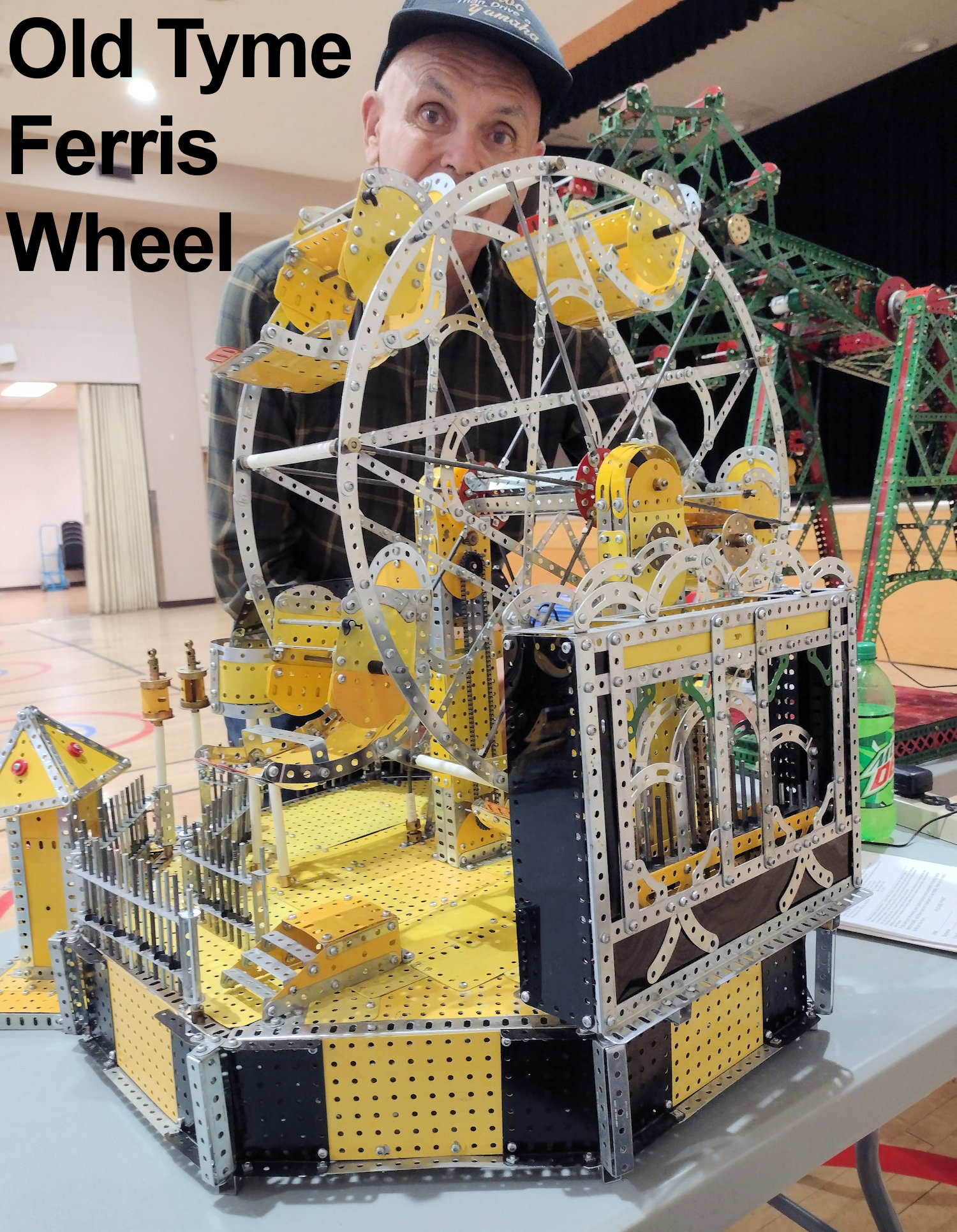
By Ernest Chandler.
Rebuilt and described by Jerry DuBois.
The model described in this leaflet is rather different from most in that it is a model of a Victorian toy.
See also:
[/vc_column_text][/vc_column_inner][/vc_row_inner][vc_separator color=”custom” border_width=”5″ accent_color=”#ffa826″ css=”.vc_custom_1580303244952{padding-top: 20px !important;padding-bottom: 10px !important;}”][/vc_column][/mk_page_section][mk_page_section][vc_column][vc_row_inner][vc_column_inner width=”1/6″][/vc_column_inner][vc_column_inner width=”1/4″][mk_image src=”http://staging.cmamas.ca/wp-content/uploads/2024/01/csm16-stainless-steel-heat-treatment-plant-scaled.jpg” image_size=”full” link=”http://staging.cmamas.ca/CSM/CSM16 Stainless Steel Heat Treatment Plant.pdf” target=”_blank” drop_shadow=”true”][/vc_column_inner][vc_column_inner width=”7/12″][vc_column_text css=”.vc_custom_1705682394566{margin-bottom: 0px !important;}”]CSM16 Stainless Steel Heat Treatment Plant
By Rob Mitchell.
The model is based on the actual plant in Sheffield; you may well have passed it while on the motorway at Tinsley. Heading North and before crossing the viaduct, you come to an industrial shed forming one support for a large yellow crane, with stainless steel coils below.[/vc_column_text][/vc_column_inner][/vc_row_inner][vc_separator color=”custom” border_width=”5″ accent_color=”#ffa826″ css=”.vc_custom_1580303244952{padding-top: 20px !important;padding-bottom: 10px !important;}”][/vc_column][/mk_page_section]